Community
Universal Business Technologies Inc. is committed to making a difference in lives of children around the world.
Osu Children’s Home
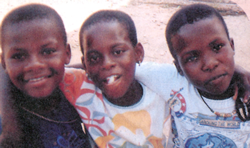 The home was setup in 1949 by a group of Ghanaians as the Child Care Society in a suburb of Accra, Ghana known as Kaneshie. They cared for orphans and other vulnerable children until 1962 when the government took over and the children were transferred to the current facilities and placed under the Department of Social Welfare.
The Osu Children’s Home is a provision of residential care which supplies education, health care and recreation to children while they are living at the home. They also provide adoption and foster care services and will help search for families to reunite orphan children. Since permanent institutional care is the last resort, in most cases, children who are not fostered, adopted or reunited with families are also assisted with looking for jobs and resettlement outside of the home after their primary education.
Universal Business Technologies Inc has been suporting the Osu Childrens home for nearly a decade.
Critical Care Development Project
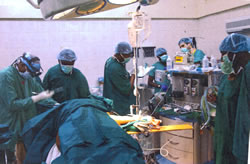 The aim of this project is to take a substantial step toward addressing critical care medicine and related global health care disparities through education, training, research and developmental consultation. The public health community, infectious disease doctors and other have made and continue to make tremendous in-roads in healthcare improvement in developing countries in areas ranging from sanitation and anti-malaria campaigns to vaccination and nutrition programs. However, we are at a curious point in time where healthcare technology and innovation has moved forward in the developed world while the less developed countries are given the message the advanced medical care should not even be an option until all of the public health issues that are traditionally associated with poverty have been eradicated within those countries.
Across the African continent there are individual shining star institutions such as the University of Benin City Teaching Hospital of Nigeria where residents receive formal training and practice in an ICU setting, resuscitation medicine is rehearsed and every reasonable effort is made to manager patients who have survivable critical care illnesses. Various Countries within the continent are at different stages of development. Countries with positive track records of political and economic stability such as Ghana tend to be among the first to recognize that higher levels of care should at least be available at the national referral centers. However, the amount of resources available and attention paid to those who require critical care medicine support appears to be extremely limited.
The program will accomplish this aim by taking a team of nationally recognized experts from the Society of Critical Care Medicine (SCCM) and Johns Hopkins Hospital to tinstruct local doctors and nurses in;
-
Fundamentals in Critical Care Support Course (FCCS).
-
Surviving Sepsis Campaign Lectures
-
Safe Surgery Checklist / Hand Hygiene Presentations
-
Critical Care Nurse Education